The Mood-First Prompt Method: Reverse the Suno Formula
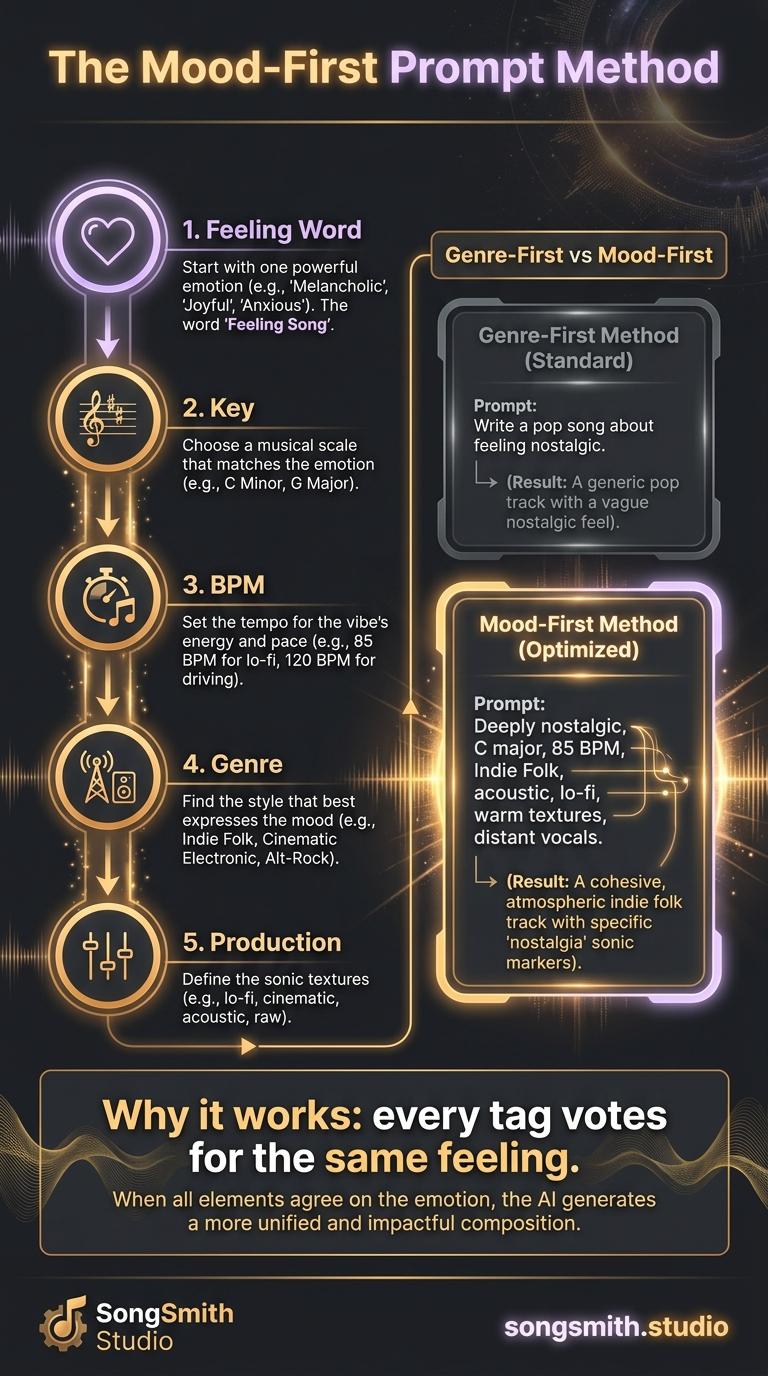
The standard Suno style-prompt formula puts genre first. Logical, because genre is the strongest position-1 tag. But genre is a *container*, not an *intention*. If you start there, you write a song that fits a box. If you start with mood, you write a song that fits a moment. After analyzing thousands of prompts run through SongSmith, the prompts that hit emotionally don't lead with genre, they lead with a feeling word and let everything else fall in line.
Why Genre-First Prompts Sound Generic
Suno averages signals from your tags. When tags share an emotional center, the averaging produces something coherent. When they don't, it produces something generic. Genre-first prompts often pull tags from across the emotional spectrum ("indie rock" + "melancholic" + "jangly" + "male vocal" + "110 BPM"). Each is fine, but no single tag is *deciding* what the song should make you feel. Mood-first stacks the deck so every tag votes the same direction.
The Mood-First Method (5 Steps)
Step 1: Pick One Feeling Word
Not "sad and reflective and a bit hopeful." Pick one: *grief, ache, restless, triumphant, weightless, defiant, tender, eerie.* One word forces clarity and gives every downstream tag a north star to orbit.
Step 2: Pick a Key That Matches the Feeling
- Grief / heartbreak → D minor or F minor
- Restless / anxious → E minor
- Tender / hopeful → A major or D major
- Triumphant / anthemic → G major or E major
- Eerie / unsettled → A minor or B♭ minor
Step 3: Pick a BPM That Matches Your Body's Response
Read the feeling word and notice your breathing. Slow grief = 60–75 BPM. Restless = 95–110 BPM. Triumphant = 120–135 BPM. Don't intellectualize it. Your body knows the tempo before your head does.
Step 4: Now Pick the Genre
Whatever genre best carries that mood, key, and tempo. Often it surprises you. "Triumphant + 130 BPM + G major" might pull synthwave instead of the rock you assumed. Let the feeling choose the container.
Step 5: End with One Production Tag
*Reverb-drenched, dry punchy, warm analog, lo-fi tape hiss, spacious.* Just one. Production tags compete with each other; one well-chosen tag locks the texture without diluting the mood-vote of the earlier tags.
Why This Works on Suno Specifically
Tag position weights matter (see our guide on tag priority ordering), but tag *coherence* matters even more. Genre-first prompts are usually accidentally incoherent. Every tag is technically fine, but they describe a *style* without specifying a *purpose*. Mood-first prompts are intentionally coherent because the first decision (the feeling word) constrains every tag that follows.
How to Use the Mood-First Method
Take any song idea you have right now and rewrite the prompt mood-first. Same ingredients, but you're telling Suno *why* before *what*.
Before (Genre-First)
indie rock, melancholic, jangly guitars, male vocal, lo-fi, 110 BPMAfter (Mood-First)
ache, A minor, 92 BPM, indie rock, jangly clean guitars, breathy male vocal, warm analog tapeSame ingredients, different order, very different output. The second version locks in the emotional center before Suno has a chance to default-average toward generic indie rock.
When to Stick with Genre-First
Mood-first isn't always right. If you're explicitly trying to nail a genre signature (a Max Martin pop hook, a Metro Boomin trap beat), genre-first or producer-first is better. Mood-first is for songs where the *feeling* is the point and the genre is just the vehicle.
Try It on Your Next Generation
Pick a feeling word. Pick a key that matches. Pick a BPM your body agrees with. *Now* pick a genre. End with one production tag. Generate. The shift in coherence is usually obvious from the first listen. The song sounds like it wanted to exist, not like a list of tags that ended up in the same prompt.
Create your first Suno album on SongSmith
From a single idea to a complete, YouTube-ready album. AI lyrics, Suno automation, album art, and video rendering — all in one workflow.
Get started freeKeep reading
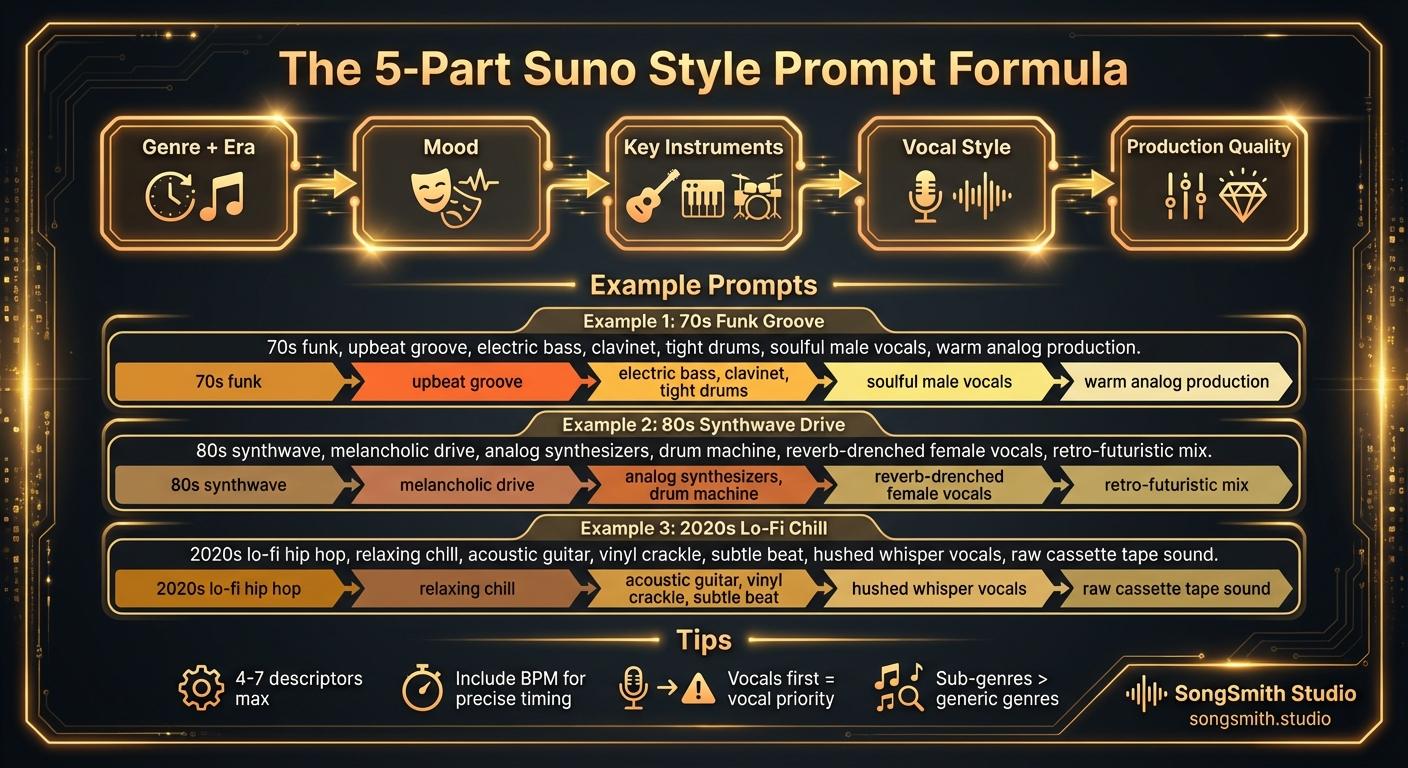
Craft Precise Style Prompts Using This Battle-Tested Formula
Master the 5-part formula for Suno style prompts: Genre + Era, Mood, Instruments, Vocal Style, Production. Learn tips for better results and example prompts that work.
2 min read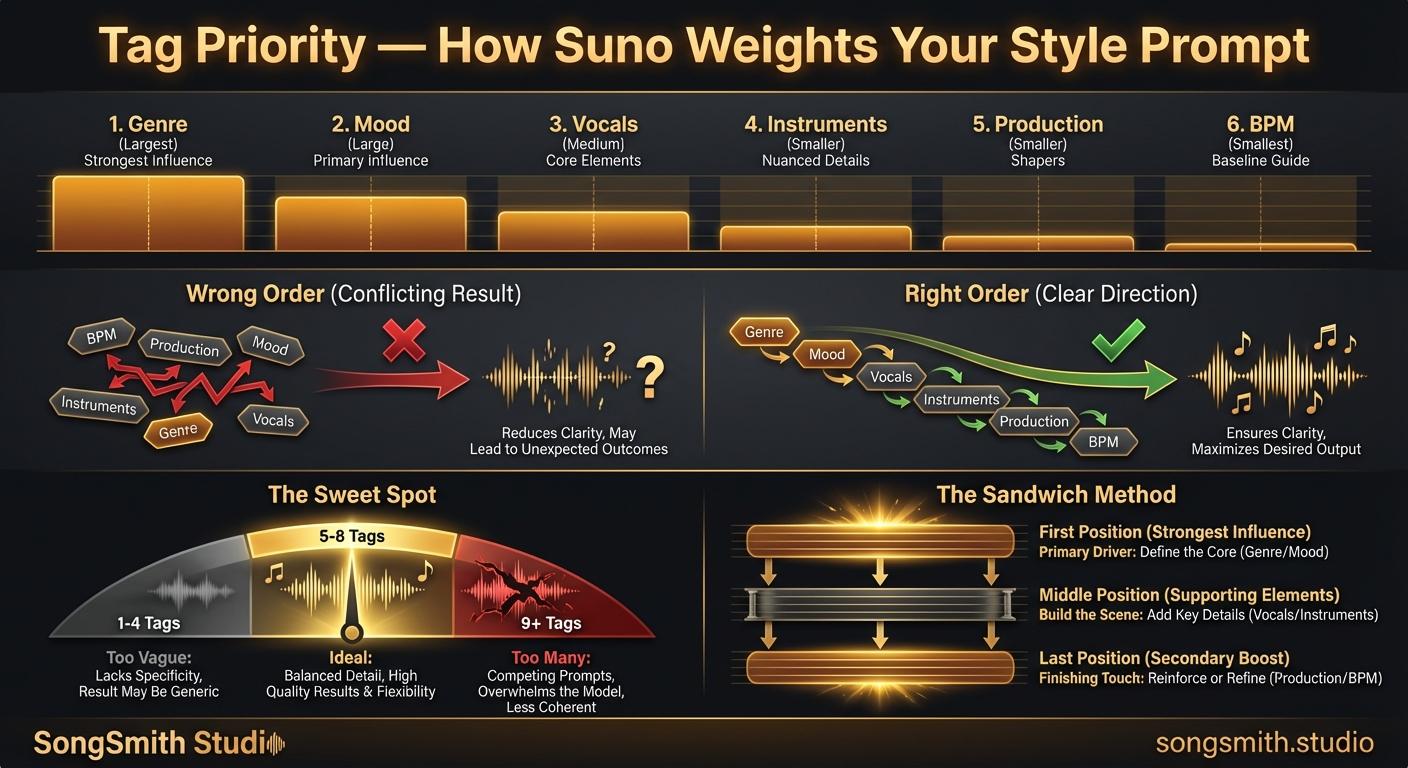
Tag Priority: How Suno Weights Your Style Prompt
Learn how Suno weights style prompt positions. First tag = 30% influence. Optimal order: genre, mood, vocals, instruments, production, BPM.
3 min read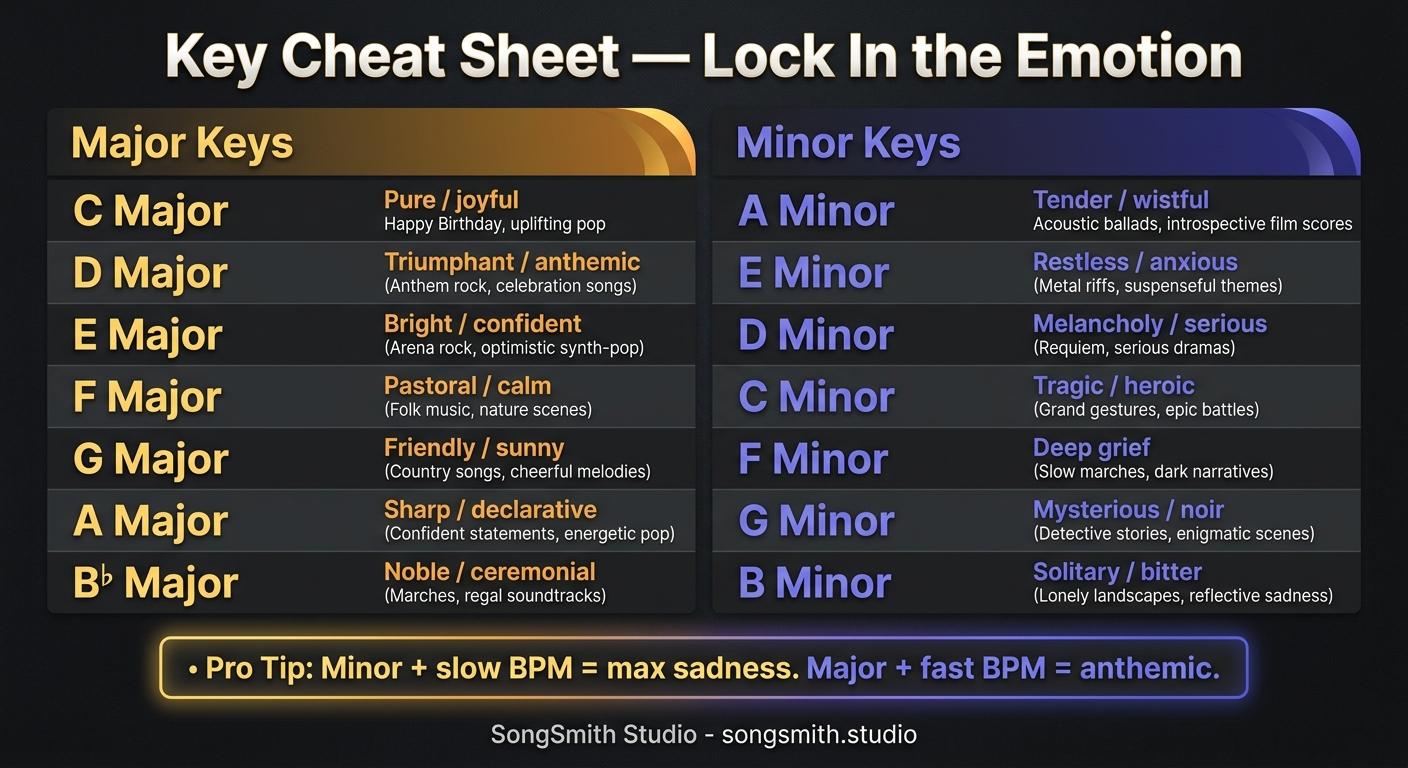
Key Cheat Sheet: Lock In the Emotion of Your Suno Song
Every major and minor key has its own emotional fingerprint. Use this reference chart to specify the exact key Suno should use, and stop defaulting to bland C major.
3 min read