Craft Precise Style Prompts Using This Battle-Tested Formula
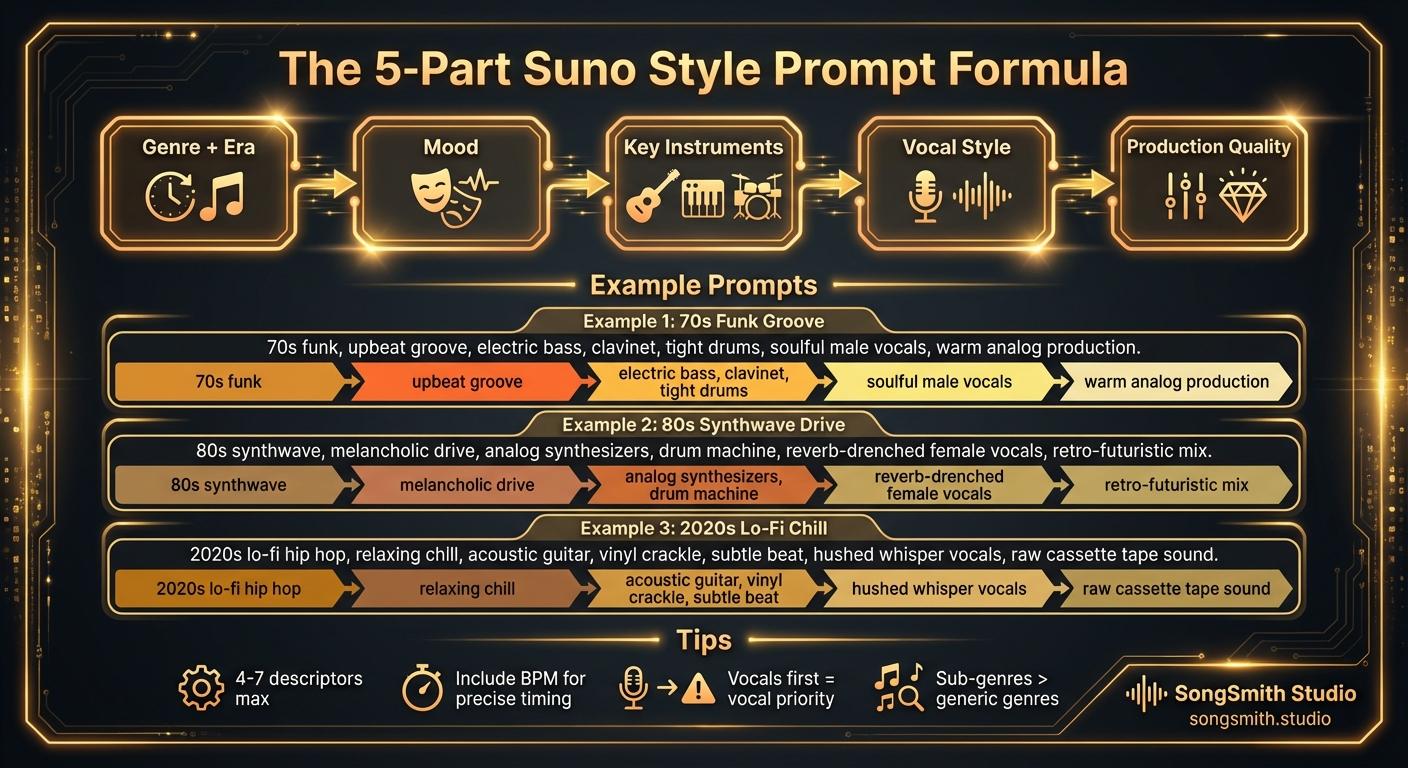
After experimenting with thousands of Suno style prompts, there's a clear pattern in what separates good outputs from great ones. It always comes down to the same 5-part formula. This structure works across every genre and consistently delivers intentional, focused results.
The 5-Part Formula
[Genre + Era], [Mood], [Key Instruments], [Vocal Style], [Production Quality]Real-World Examples
Here are three prompts that follow the formula:
90s alternative rock, melancholic, distorted guitars and cello, raspy male vocals, lo-fi recordingModern cinematic pop, uplifting, orchestral strings and synth pads, powerful female belt, polished studio mixDark trap, aggressive, 808 bass and hi-hats, deep male rap, heavy sub bass, 140 BPMEach prompt covers all five parts in order, giving Suno a complete picture of what to generate.
Why This Order Works
Suno reads your style prompt left to right and prioritizes what comes first. That's why we lead with Genre + Era. It sets the foundational sound. Then Mood adds emotional direction. Key Instruments anchor the specific textures. Vocal Style controls the human performance. Production Quality caps it off with the final polish. The tag priority ordering guide goes deeper on position.
If you care most about the vocal performance, move the vocal descriptor earlier in the prompt. If the instrumental texture is critical, emphasize those descriptors. Priority always follows position.
Pro Tips That Make the Biggest Difference
- Keep it to 4–7 descriptors. More than that and Suno gets confused about what you actually want. Precision beats length.
- Always include BPM if tempo matters. "140 BPM" at the end anchors the speed without taking up much space. The BPM cheat sheet lists ranges by genre.
- Put vocal descriptors first if you care about the voice. Suno prioritizes what comes first, so if vocal character is critical, lead with it.
- Use sub-genres, not just generic terms. "Dream pop" or "midwest emo" gives way better results than just "rock" or "pop". Specificity drives better generations.
- Try blending unexpected genres. Jazz + electronic, cinematic + hip-hop, indie folk + synthwave. Some of the best tracks come from weird combos that force Suno into interesting territory.
Genre Blending: The Secret Weapon
Unexpected genre combinations consistently produce fresh, interesting results. Instead of settling for "synthwave," try "retro synthwave with indie vocals." Instead of "house," try "lo-fi house with jazz chords." The blend forces Suno to synthesize multiple styles, and that tension creates originality.
Testing Your Prompt
Once you've written your style prompt using the 5-part formula, run 2–3 test generations before committing credits to a full song. Short clips let you hear if the style landed without burning through your budget. If it's close but needs tweaking, adjust one descriptor at a time (usually the genre or mood first) and test again. To build the prompt part by part, try the free Suno Prompt Studio.
The Formula Is Your Foundation
The 5-part formula isn't rigid. It's a framework that makes your prompts clearer, more consistent, and more likely to generate what you actually want. Master this structure, and you'll instantly level up your Suno results.
One Suno technique a week
A short breakdown you can use on your next song, from the team behind these guides. Free.
Free Suno tools
Keep reading
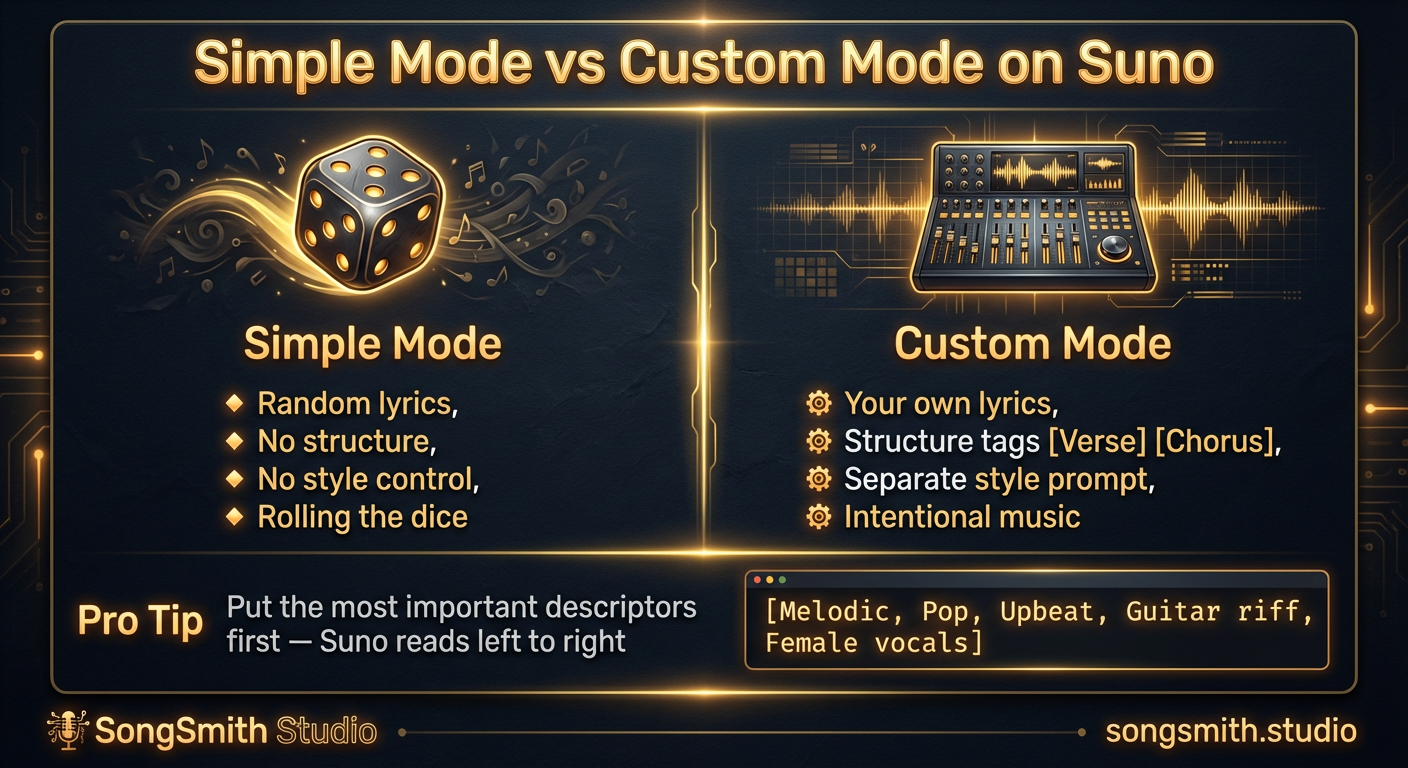
Why Custom Mode Gives You Total Control Over Your Suno Songs
Simple Mode limits your Suno songs. Switch to Custom Mode to write your own lyrics, control structure and get intentional music instead of random results.
2 min read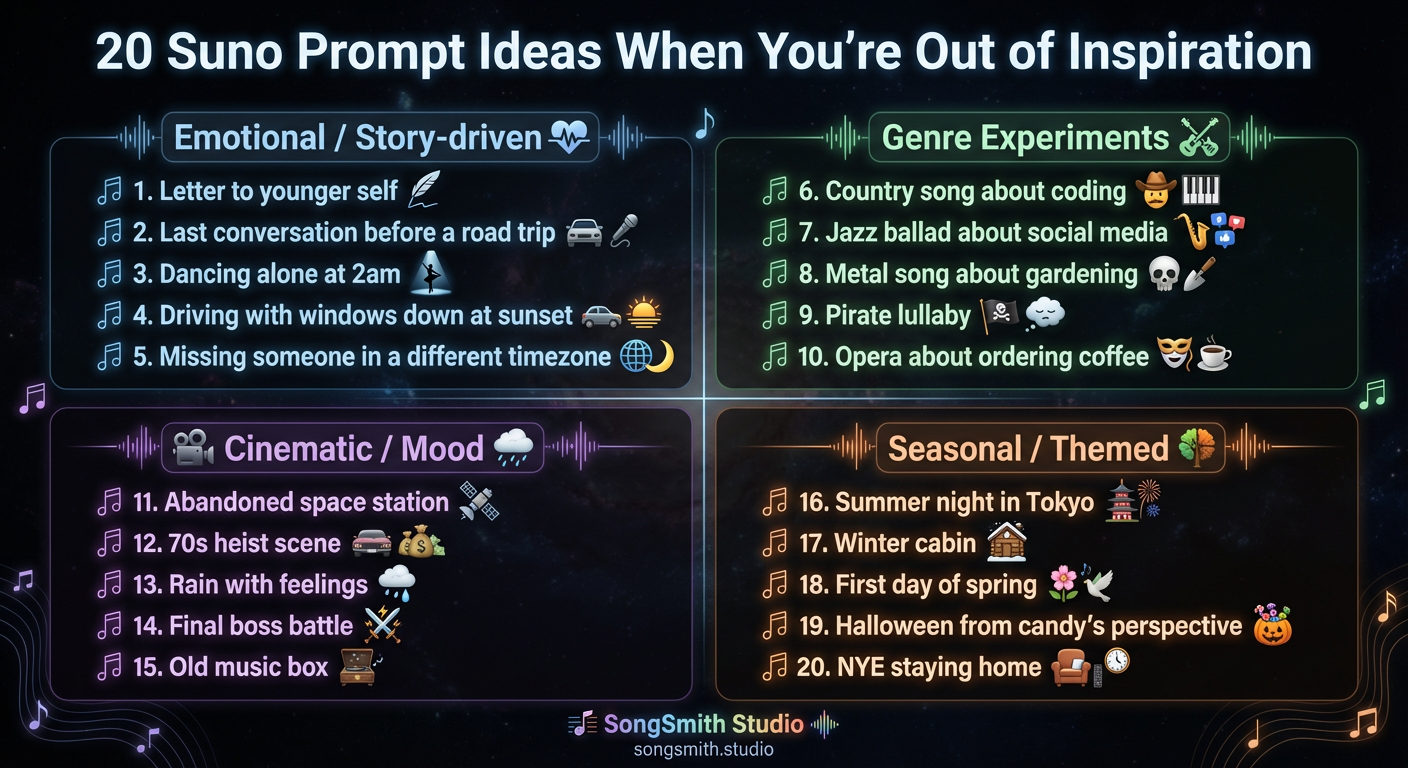
20 Suno Prompt Ideas When You're Completely Out of Inspiration
20 ready-to-use song concepts for Suno, grouped by category: emotional stories, genre experiments, cinematic moods and seasonal themes.
2 min read