10 Production Tags That Transform Your Suno Sound
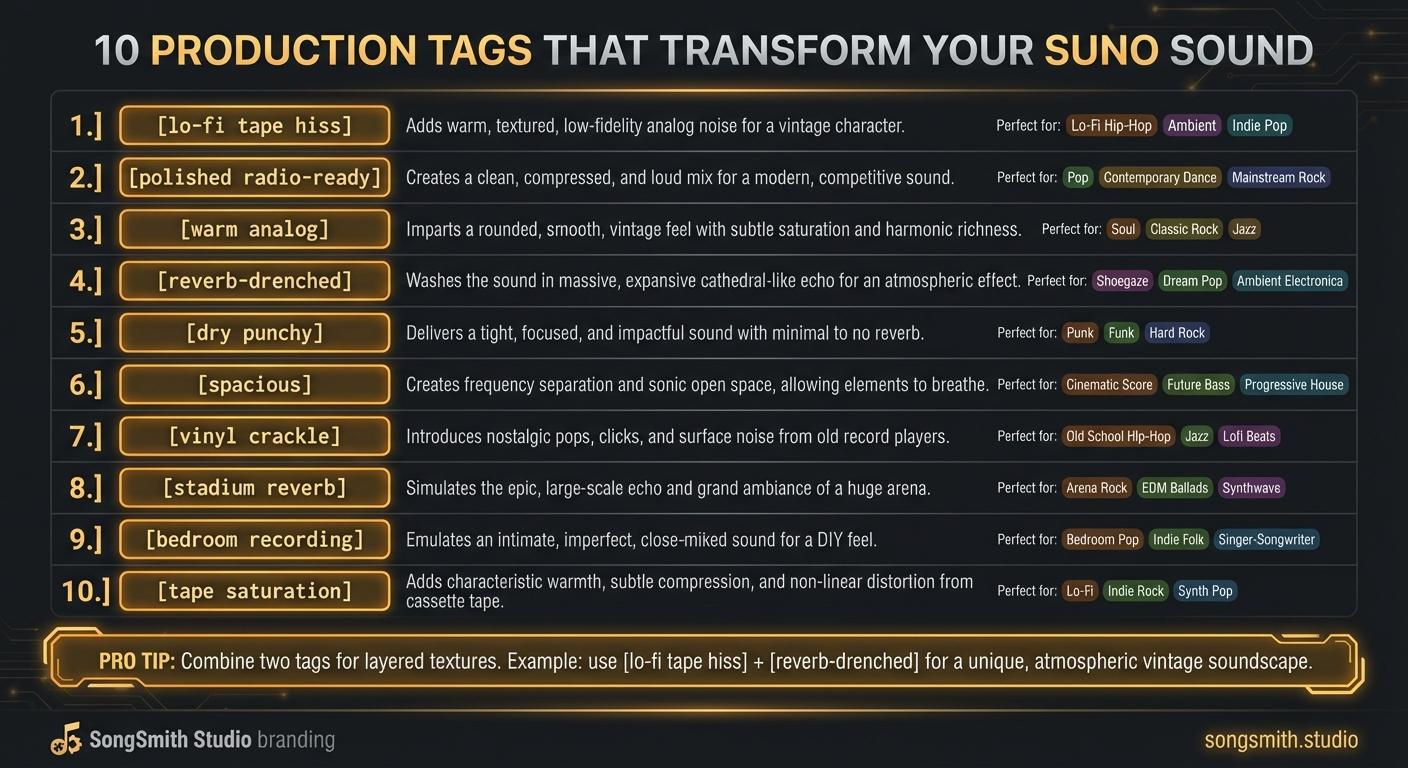
Most Suno users focus entirely on genre and vocals but completely ignore production tags. These are the descriptors that control the texture, space, and vibe of your recording, the difference between amateur and polished. Adding just one production tag to your style prompt can transform the entire output from flat to lush, from harsh to warm, from tiny to epic.
What Are Production Tags?
Production tags describe how your song sounds rather than what plays. They control recording technique, spatial characteristics, and signal processing. While genre tags say "pop" and vocal tags say "warm alto," production tags say "polished radio-ready, vocal-forward" or "lo-fi tape hiss, intimate." They're the final layer that defines your song's sonic character.
10 Production Tags and What They Actually Do
1. "lo-fi tape hiss"
Adds warm analog noise and soft distortion. Perfect for: lo-fi hip-hop, bedroom pop, chill beats, indie folk. Creates an intentionally imperfect, nostalgic sound like a cassette recording.
2. "polished radio-ready"
Clean, compressed, loud. The track sounds like it could go on Spotify today. Perfect for: pop, modern R&B, dance, alternative. Maximizes loudness and clarity for commercial appeal.
3. "warm analog"
Rounded frequencies, smooth midrange, vintage feel. Perfect for: soul, jazz, retro pop, indie, funk. Mimics the harmonic saturation of vintage tube equipment.
4. "reverb-drenched"
Everything sounds like it was recorded in a cathedral. Perfect for: shoegaze, dream pop, ambient, post-rock, ethereal vocals. Creates massive space and echo, great for emotional, floating vibes.
5. "dry punchy"
Tight, in-your-face, no reverb tail. Every hit lands hard. Perfect for: punk, trap, hip-hop, garage rock, industrial. Maximizes impact and presence with zero wasted space.
6. "spacious"
Opens up the frequency spectrum - instruments and vocals have room to breathe. Perfect for: any genre where vocal clarity matters, indie pop, acoustic, singer-songwriter. Makes tracks feel less crowded and increases intelligibility.
7. "vinyl crackle"
Subtle record-player texture. Instant nostalgia. Perfect for: lo-fi, jazz, soul, downtempo, funk. Adds character without being overpowering, great for warm, vintage vibes.
8. "stadium reverb"
Big, epic, echoing. Sounds like a live concert in an arena. Perfect for: rock anthems, power ballads, EDM drops, orchestral. Makes everything feel monumental and immersive.
9. "bedroom recording"
Intimate, imperfect, close. Sounds like someone singing into a laptop mic at 2am. Perfect for: singer-songwriter, acoustic, emo, indie folk, bedroom pop. Creates vulnerability and raw emotion.
10. "tape saturation"
Adds warmth and subtle harmonic distortion like a cassette recording. Perfect for: any genre needing vintage character, classic rock, funk, R&B, indie. Similar to lo-fi but more subtle and musical.
How to Use Production Tags in Your Style Prompt
Place production tags at the end of your style prompt, after genre and vocal descriptors:
Example Structure
[Genre], [BPM], [Vocal Description] + [Production Tag(s)]

Warm indie folk, 108 BPM, breathy female vocals + bedroom recording, spacious
Pro Tips for Layered Production Sound
- Combine two production tags for layered textures: "warm analog, vinyl crackle" creates vintage richness, or "spacious, reverb-drenched" creates ethereal depth
- "Spacious" + "vocal-forward" is the magic combo for clear vocals in any genre: it opens up the mix while keeping vocals prominent
- Never use contradicting production tags: "dry punchy" and "reverb-drenched" will confuse the model and cancel each other out
- Use decade references to narrow production style: "80s synth-pop production" vs "2020s synth-pop production" sound completely different. Suno responds to era-specific cues.
- Production tags work best at the end: genre and vocal tags establish foundation, production tags add the final polish
Real-World Examples
Lo-Fi Hip-Hop
lo-fi hip-hop, 72 BPM, smooth male vocals + lo-fi tape hiss, vinyl crackle, warm analogModern Pop
pop, 120 BPM, bright female vocals + polished radio-ready, vocal-forward, spaciousAmbient Shoegaze
shoegaze, 100 BPM, breathy male vocals + reverb-drenched, stadium reverb, etherealPunk Rock
punk rock, 135 BPM, raw male vocals + dry punchy, garage recording, aggressiveTexture Transforms Your Track
Production tags are the secret weapon of experienced Suno creators. While beginners focus on genre and vocals alone, pros understand that texture and spatial character determine whether a track feels professional or amateur. By mastering these 10 tags and learning to combine them intentionally, you unlock control over the entire sonic palette. Save this guide, reference it in every prompt, and watch your track quality leap forward.
Create your first Suno album on SongSmith
From a single idea to a complete, YouTube-ready album. AI lyrics, Suno automation, album art, and video rendering — all in one workflow.
Get started freeKeep reading
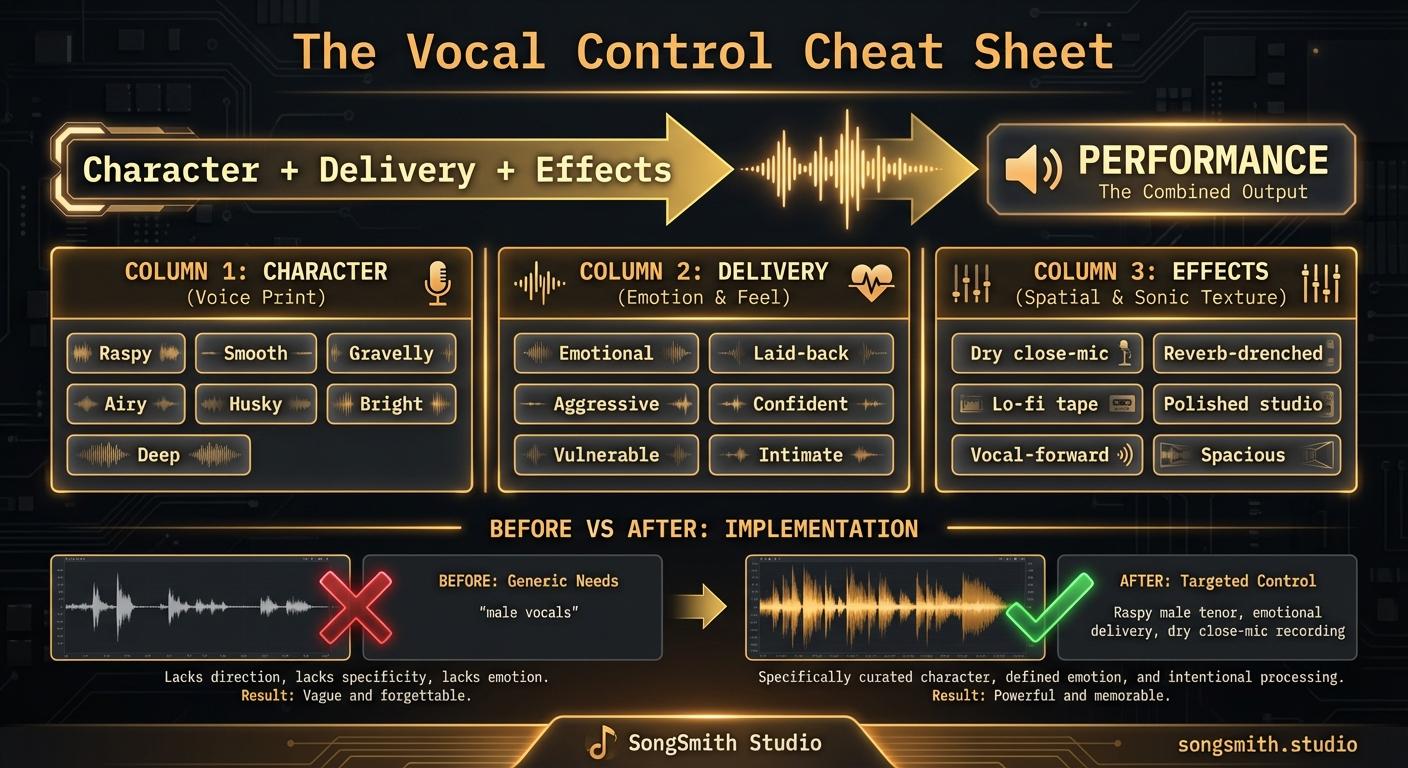
The Vocal Control Cheat Sheet: Master the 3-Layer Formula
Control Suno vocals with the Character + Delivery + Effects formula. Master male, female, and unique vocal descriptions for professional-sounding AI music.
3 min read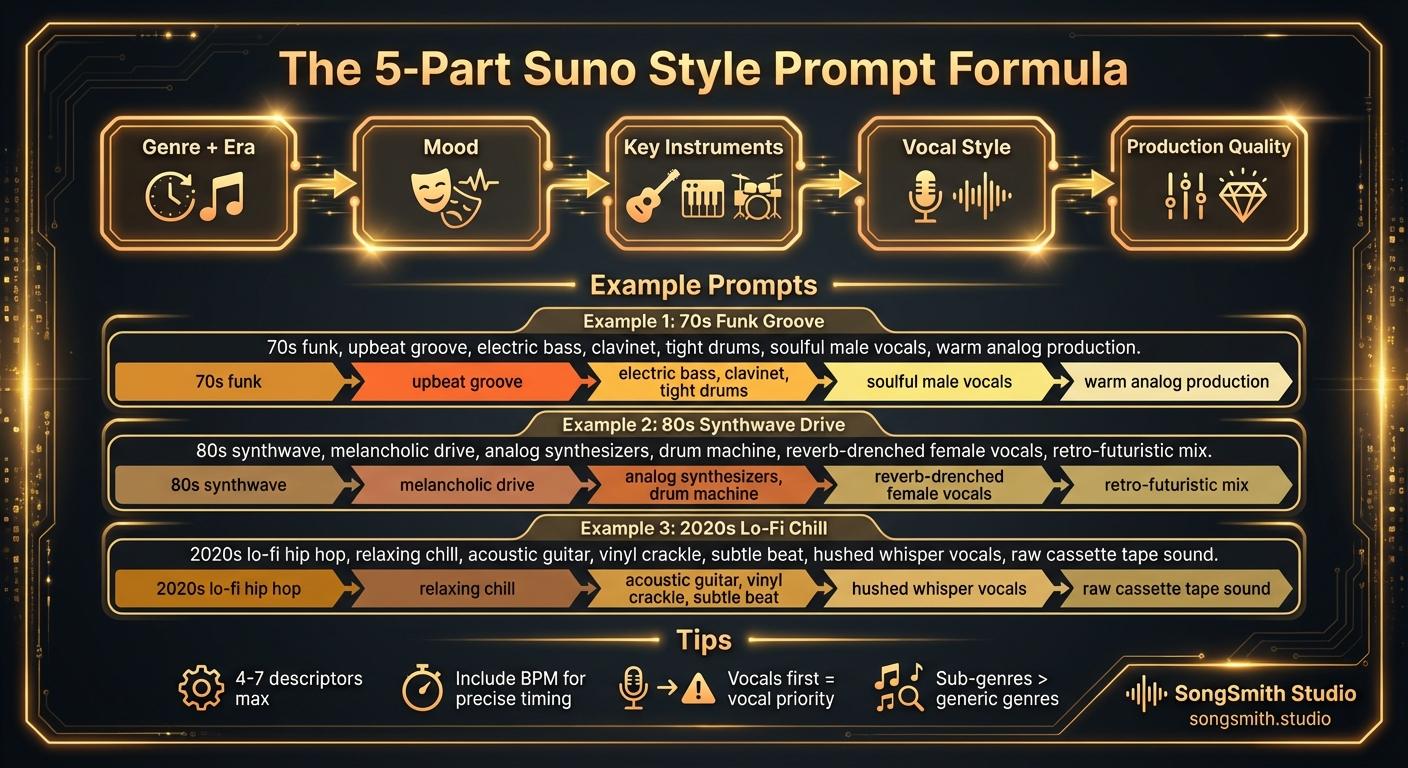
Craft Precise Style Prompts Using This Battle-Tested Formula
Master the 5-part formula for Suno style prompts: Genre + Era, Mood, Instruments, Vocal Style, Production. Learn tips for better results and example prompts that work.
2 min read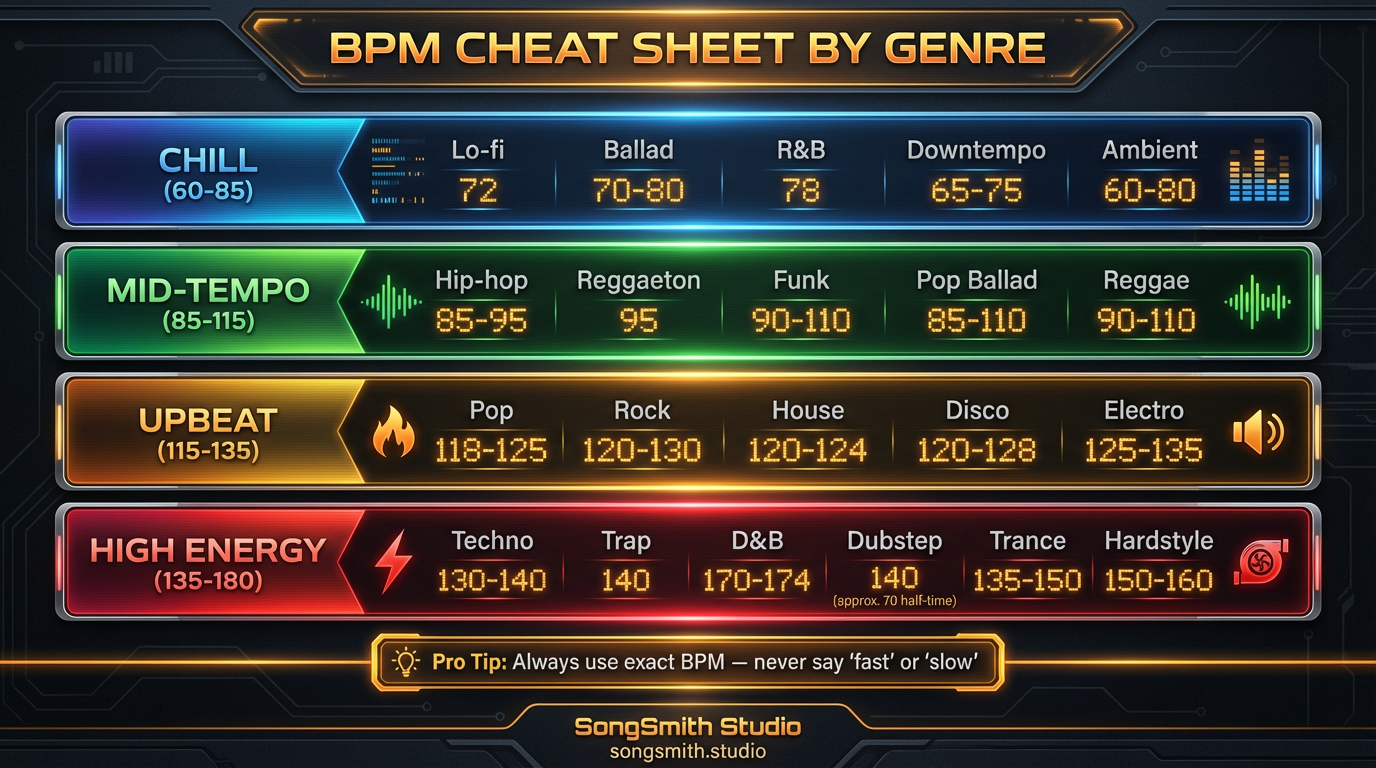
BPM Cheat Sheet by Genre: Stop Saying Fast or Slow
Never guess BPM again. Reference exact tempo ranges for every genre from lo-fi to hardcore punk. Control your Suno song's energy with precise beats per minute.
3 min read