The Vocal Control Cheat Sheet: Master the 3-Layer Formula
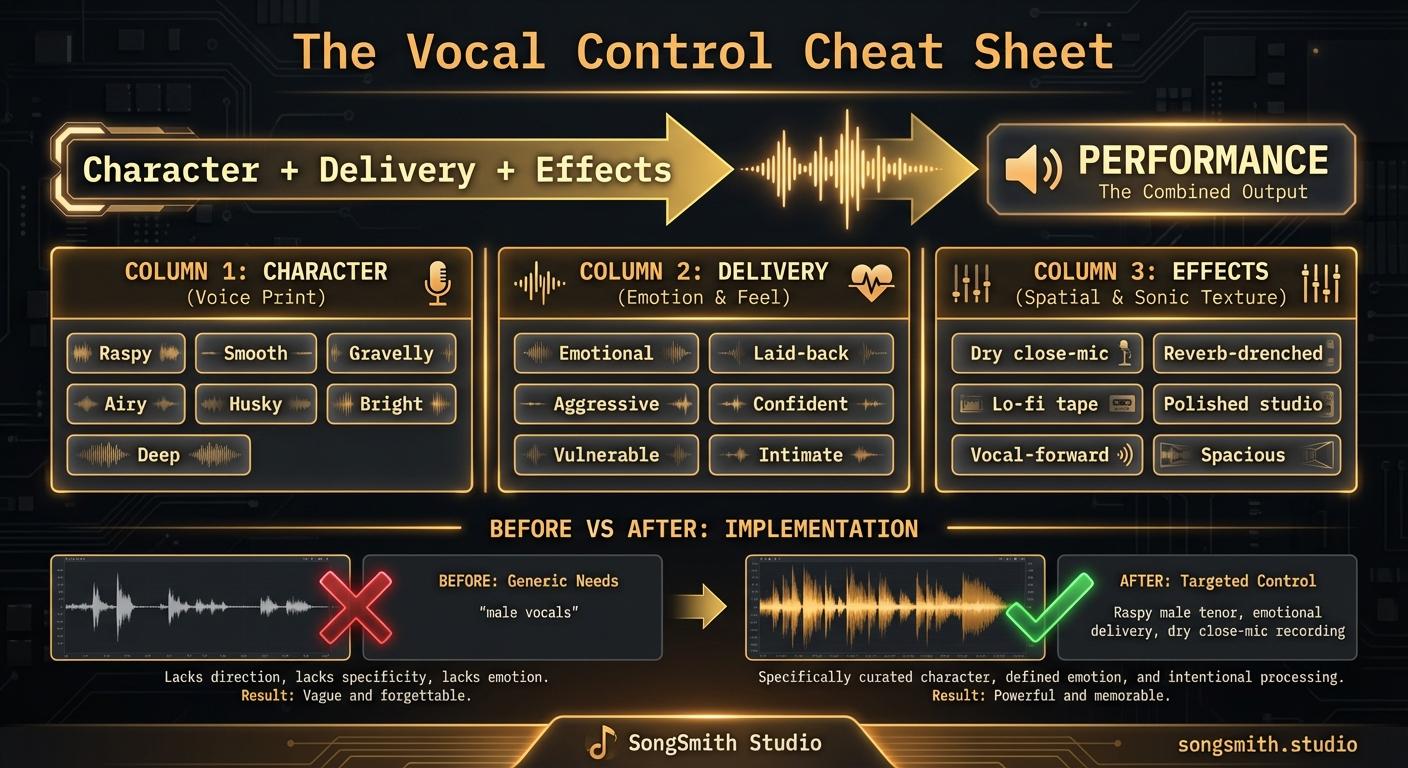
"Male vocals" gives Suno almost nothing to work with. If you want real control over how your song sounds, you need to use a structured formula that addresses three distinct layers: Character (who's singing), Delivery (how they sing), and Effects (what it sounds like). This 3-layer approach is the difference between generic AI vocals and professional-sounding performances.
The 3-Layer Vocal Formula
Instead of vague descriptions, build vocal tags with intention:
Bad (Vague)
male vocals, female vocalsGood (Specific)
raspy male tenor, emotional delivery, dry close-mic recording
warm female alto, breathy delivery, reverb-drenched, intimate
Layer 1: Character (Who's Singing?)
Character describes the voice's natural texture and register. These descriptors help Suno pick a voice type that matches your vision.
- Texture: raspy, smooth, gravelly, airy, nasal, husky, bright, deep
- Register: male tenor, male baritone, male bass, female soprano, female alto, female mezzo
Example: "warm, raspy male baritone" is far more precise than "male vocals."
Layer 2: Delivery (How Do They Sing?)
Delivery describes the emotional or stylistic approach to the vocal performance.
- Emotional, laid-back, aggressive, confident, vulnerable, playful
- Conversational, powerful, intimate, detached, yearning, pleading
- Robotic, soulful, theatrical, understated, passionate
Example: "emotional, vulnerable delivery" tells Suno to sing with feeling rather than coldness.
Layer 3: Effects (What Does It Sound Like?)
Effects describe the production and spatial quality of the recorded vocal.
- Recording style: dry close-mic, reverb-drenched, lo-fi tape warmth, polished studio
- Spatial characteristics: vocal-forward, spacious, confined, cathedral-like, intimate
- Signal processing: chorus effect, distorted, compressed, natural, unprocessed
Example: "dry close-mic recording" creates an intimate, in-your-face presence, while "reverb-drenched" adds space and atmosphere.
Mid-Song Vocal Changes with Inline Cues
You don't need to restart a song to change vocal delivery. Place these inline cues in parentheses inside your lyrics to shift the vocal mid-performance:
(whispered)
(belted)
(spoken word)
(falsetto)
(building intensity)
(stripped back)
Example: A verse can start conversational, then (building intensity) kicks in before the chorus hits.
Pro Tips for Vocal Clarity and Control
- Add "spacious" + "vocal-forward" to your style prompt for maximum vocal clarity across any genre
- Remove exclamation marks from lyrics if Suno keeps yelling. They trigger aggressive delivery even when you don't want it
- Put
[Gentle]or[Soft]on its own line before a verse to calm and soften the delivery without changing the lyrics - First genre tag in the style prompt carries the most weight. Put vocal-friendly genres first (e.g., singer-songwriter before trap)
- Describe artists by sound, not by name: use "atmospheric trap, moody R&B, melodic rap delivery" instead of "sounds like Drake"
Real-World Examples
Lo-fi Hip-Hop Vocal
breathy male tenor, laid-back delivery, lo-fi tape warmth, intimate recordingPop Anthem Vocal
bright female soprano, confident delivery, polished radio-ready, vocal-forwardIndie Folk Vocal
warm male baritone, vulnerable delivery, bedroom recording, intimateUnlock Professional Vocal Quality
Vocal quality is the most noticeable difference between amateur and professional-sounding Suno tracks. By moving beyond generic descriptors and using the Character + Delivery + Effects framework, you gain real control over how your AI vocalist sounds. Combine this with proper punctuation in lyrics and structure tags, and you'll achieve vocal performances that sound intentional and emotionally resonant.
Create your first Suno album on SongSmith
From a single idea to a complete, YouTube-ready album. AI lyrics, Suno automation, album art, and video rendering — all in one workflow.
Get started freeKeep reading
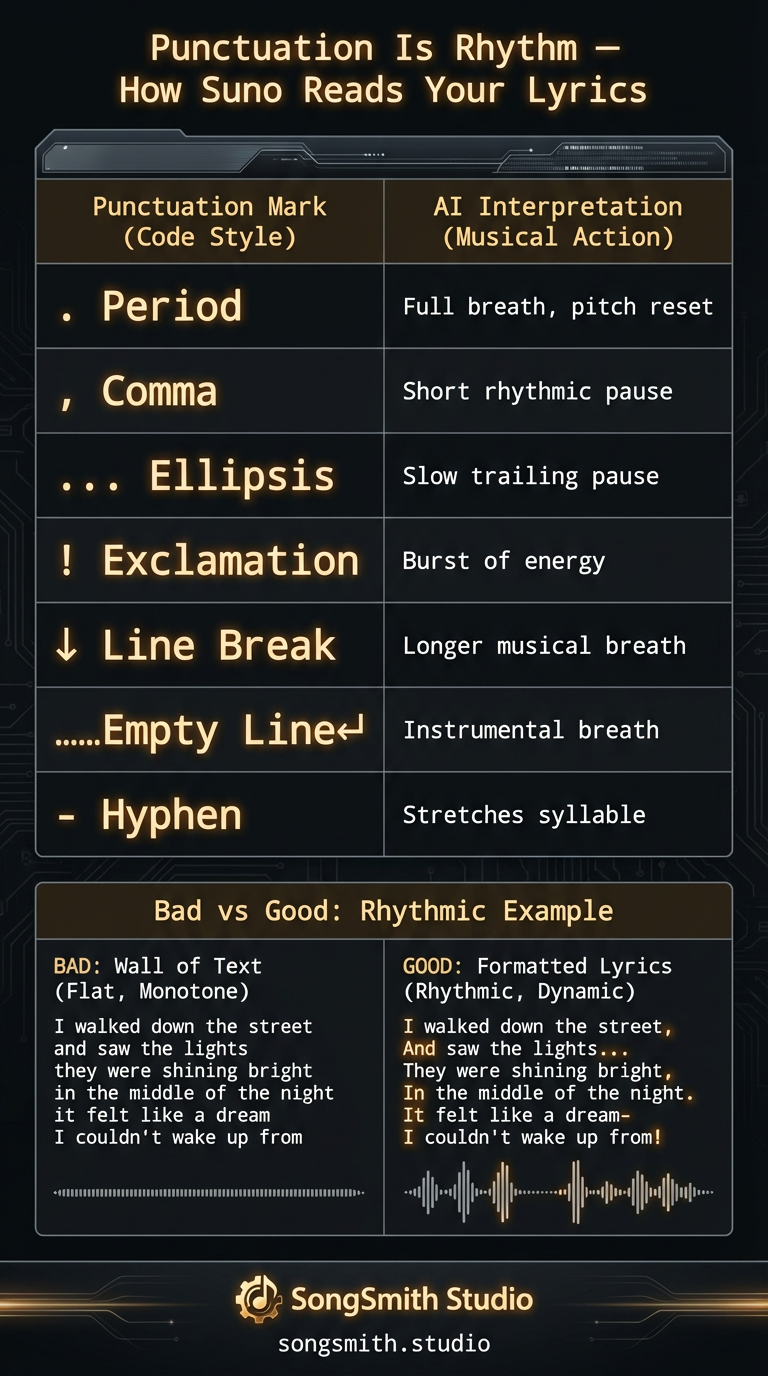
Punctuation Is Rhythm: How Suno Reads Your Lyrics
Learn how Suno interprets punctuation marks as vocal breathing instructions. Master periods, commas, ellipsis, and line breaks to control your song's delivery and emotion.
3 min read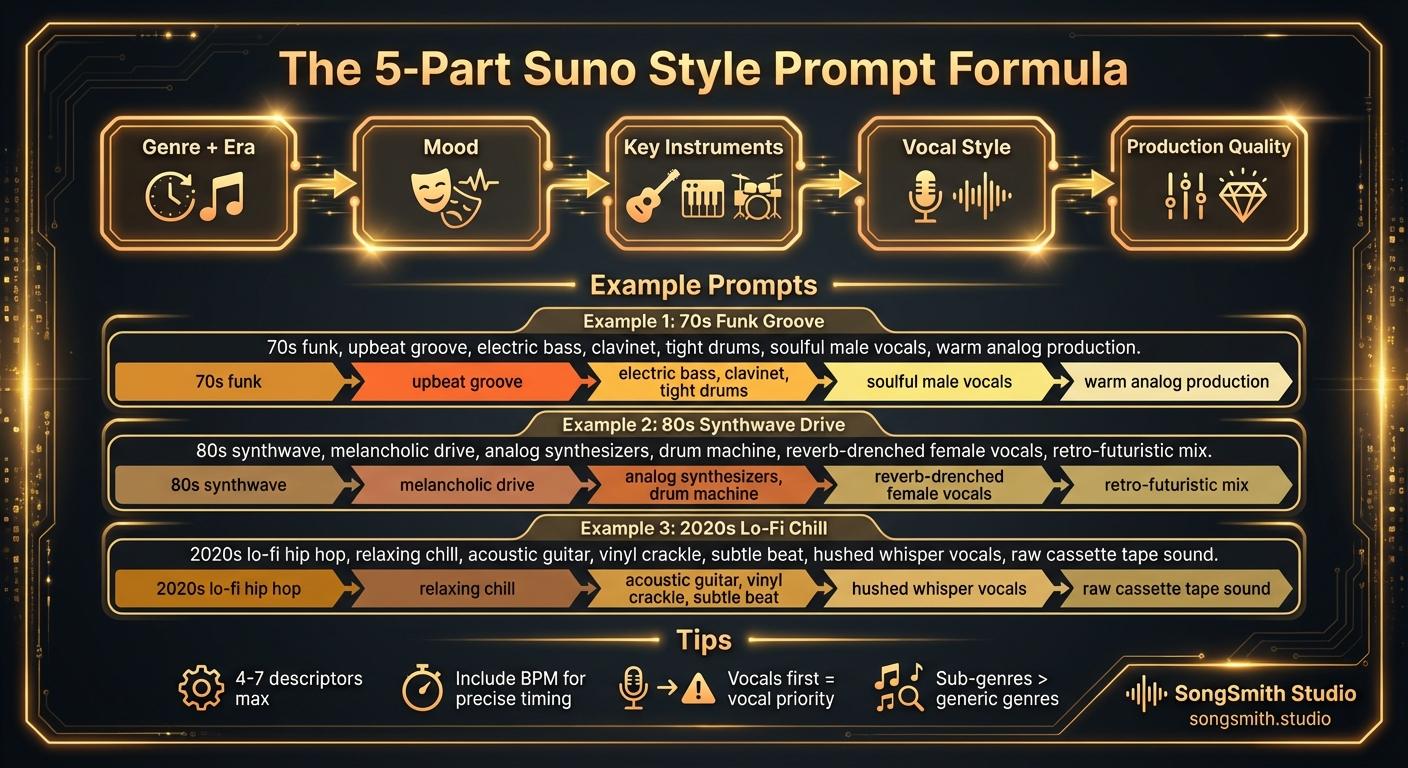
Craft Precise Style Prompts Using This Battle-Tested Formula
Master the 5-part formula for Suno style prompts: Genre + Era, Mood, Instruments, Vocal Style, Production. Learn tips for better results and example prompts that work.
2 min read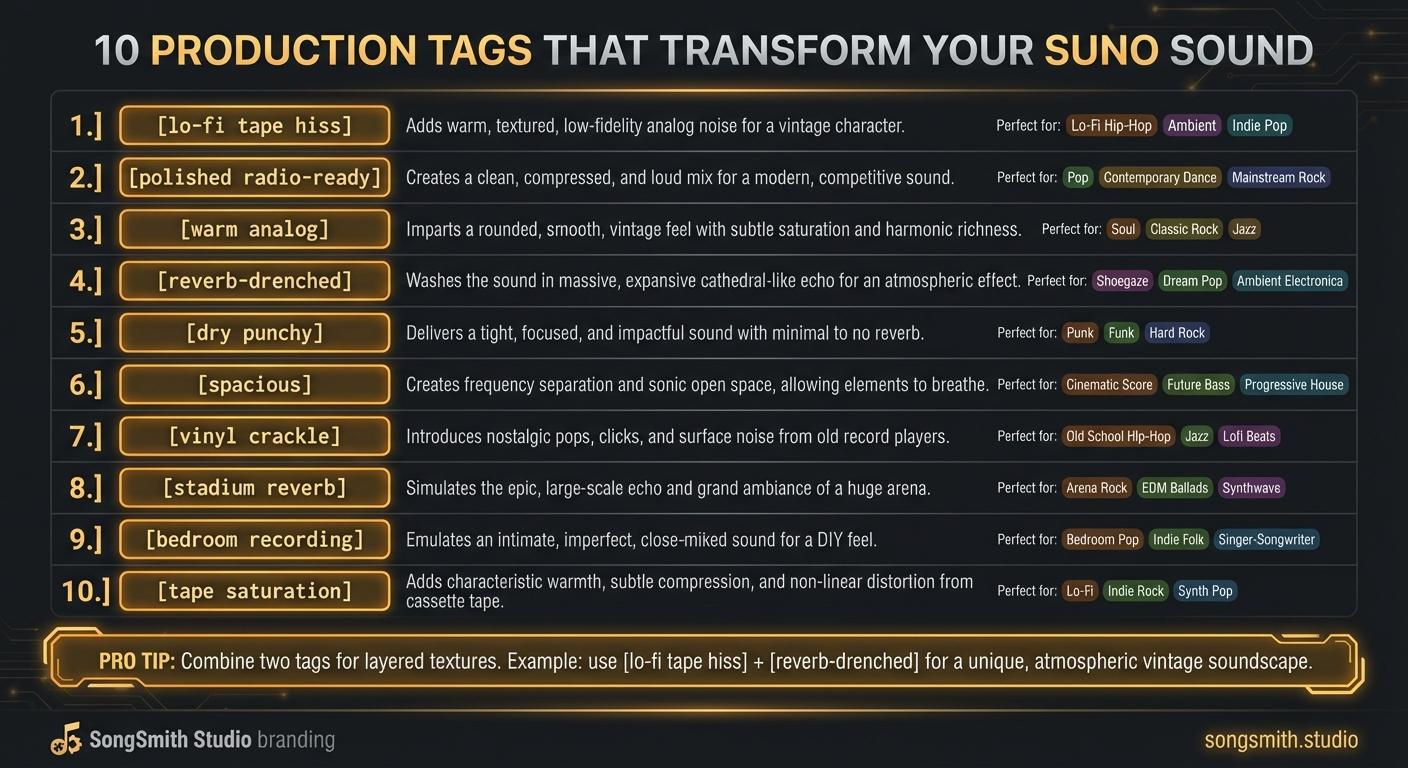
10 Production Tags That Transform Your Suno Sound
Master production tags to control texture, space, and vibe in Suno. Learn lo-fi, polished, analog, reverb, and more, transform your track's sonic character.
4 min read