Suno vs Udio in 2026: Honest Comparison from Someone Who Uses Both
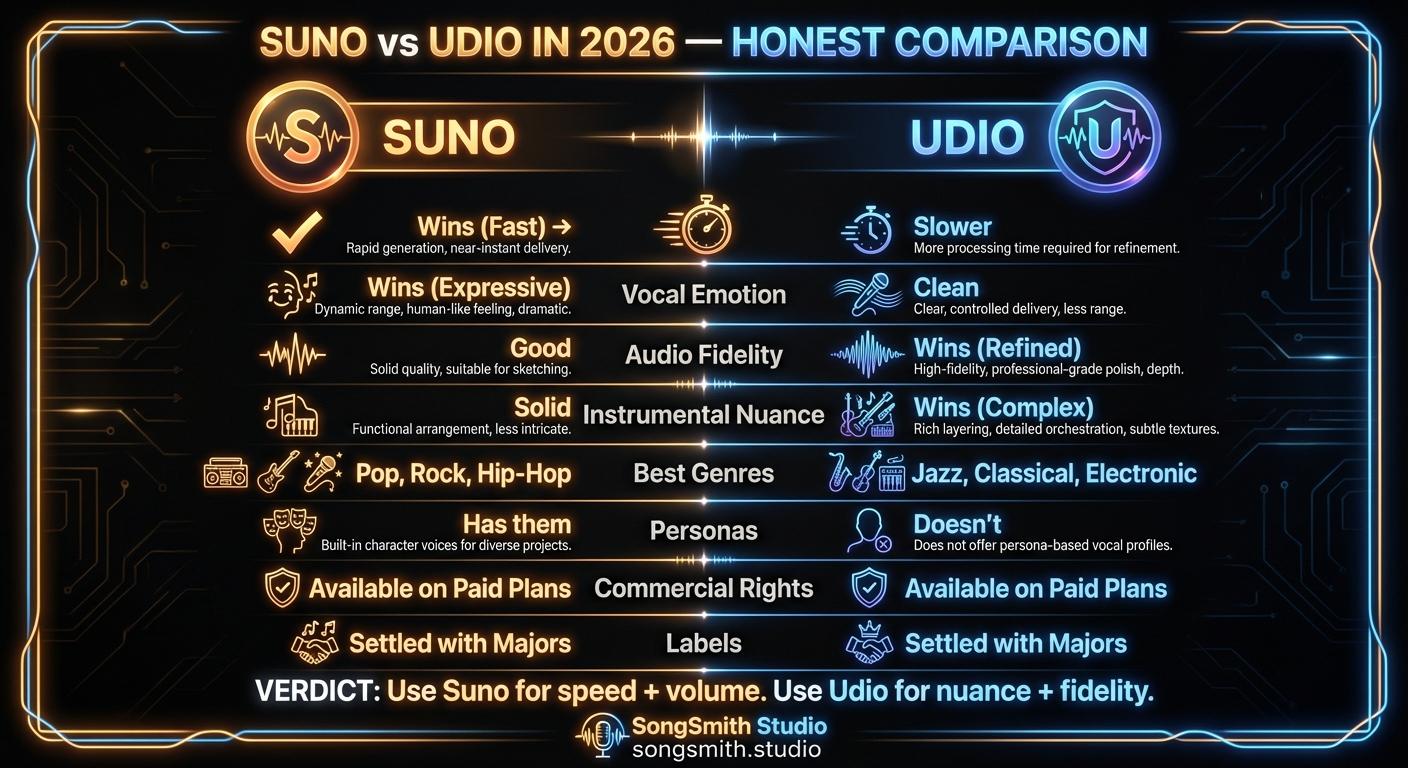
I use both Suno and Udio regularly, and people constantly ask me which one is better. The honest answer? There is no single winner. They're different tools built for different workflows. Here's my unbiased breakdown after hundreds of hours on both platforms.
Use Suno When You Want Speed and Volume
Suno excels at turning your idea into a finished song in seconds. It's the platform I reach for when I need to create 10+ tracks in a session.
- Fastest generation: prompt to full song in seconds. No comparison here.
- Expressive vocals: Suno captures breathiness, cracks, emotional dynamics, and vocal character better than any competitor.
- Mainstream genres: Pop, rock, hip-hop, and EDM sound stellar. These genres are Suno's sweet spot.
- Personas: Lock in a consistent voice across an entire album. This is game-changing for building a cohesive sound.
- Clear commercial rights: Pro plan gives you unambiguous commercial rights plus stem export.
- Volume capacity: 500 songs/month on Pro tier means you can explore freely without budget anxiety.
Use Udio When You Want Instrumental Nuance
Udio shines when you care about pristine mixing, complex arrangements, and genres where every instrument matters.
- Higher audio fidelity: Complex arrangements sound more polished and naturally mixed.
- Instrumental separation: Individual instruments sit better in the mix. Jazz, classical, and sophisticated electronic arrangements benefit most.
- Reference audio: Upload a clip to guide the style. This feature is genuinely useful for achieving specific sonic references.
- More control over the final mix: Fine-tune EQ and arrangement in ways Suno doesn't offer.
- Community discovery: Browse and remix work from other creators, which can spark ideas.
Head-to-Head: Where Each Wins Clearly
Suno Wins
- Speed: It's not even close. Suno is 5–10x faster.
- Vocal emotion: Suno's vocals are dramatically more expressive and lifelike.
- Album consistency: Personas lock in a voice across an entire project.
- Commercial clarity: Rights are straightforward.
Udio Wins
- Instrumental separation and mixing quality: Udio sounds more professionally produced.
- Complex arrangements: Orchestral and jazz pieces sound more convincing.
- Reference guidance: The ability to upload reference audio is powerful.
My Workflow
I use Suno for approximately 90% of my work because I need speed and the ability to generate massive volume. For special projects where fidelity matters more than speed: orchestral pieces, complex jazz arrangements, or cinematic soundtracks. I'll reach for Udio instead.
The Copyright Question
Both platforms have now settled with major labels, which means the copyright landscape is significantly clearer. You can pick based on your creative needs rather than legal fears. This was the elephant in the room for the past two years, but it's largely resolved.
The real question isn't which platform is objectively better. It's which one fits your workflow and creative goals. Suno if you want speed and expressiveness. Udio if you want fidelity and nuance. Many serious creators use both.
Create your first Suno album on SongSmith
From a single idea to a complete, YouTube-ready album. AI lyrics, Suno automation, album art, and video rendering — all in one workflow.
Get started freeKeep reading
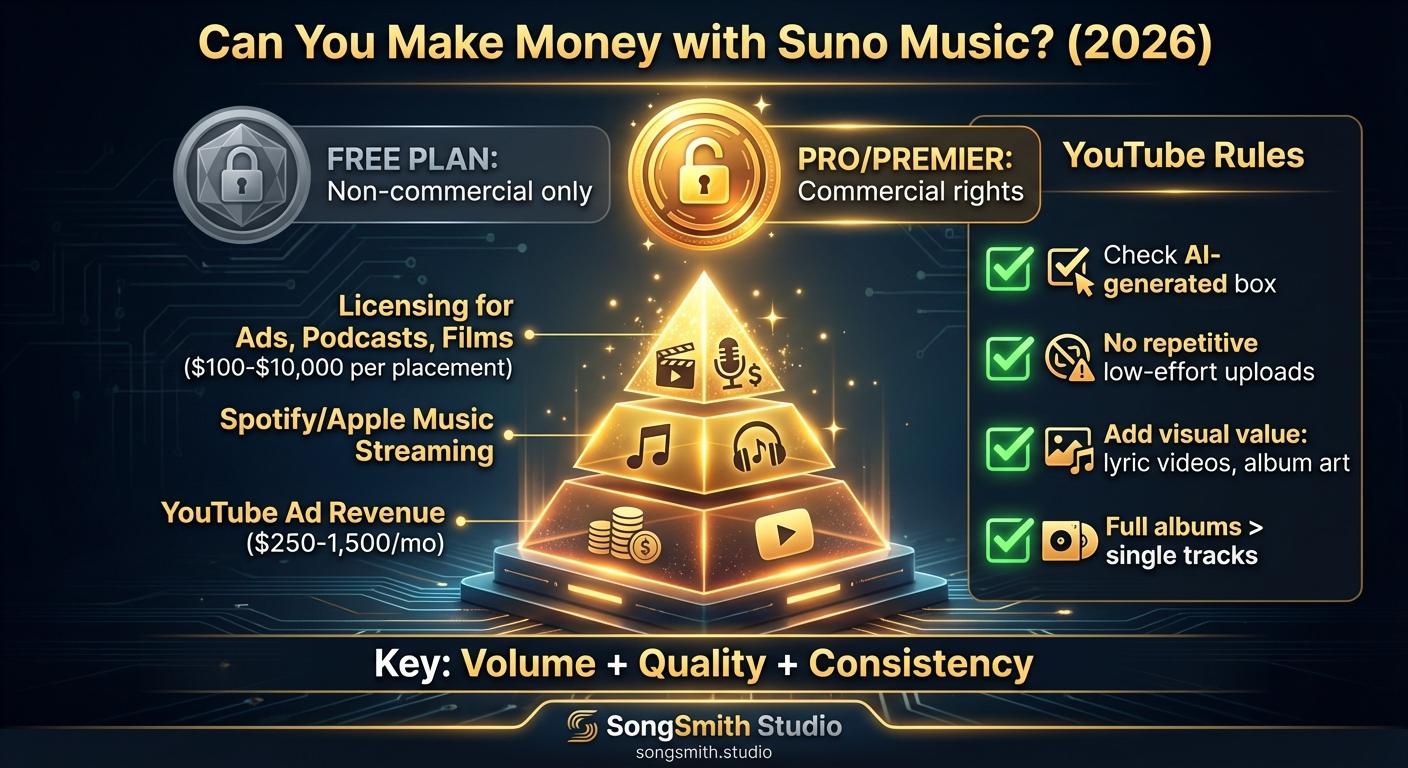
Can You Make Money with Suno Music?
Learn how to monetize Suno music on YouTube, Spotify, and beyond. Detailed breakdown of 2026 commercial rights, licensing opportunities, and real earnings strategies.
3 min read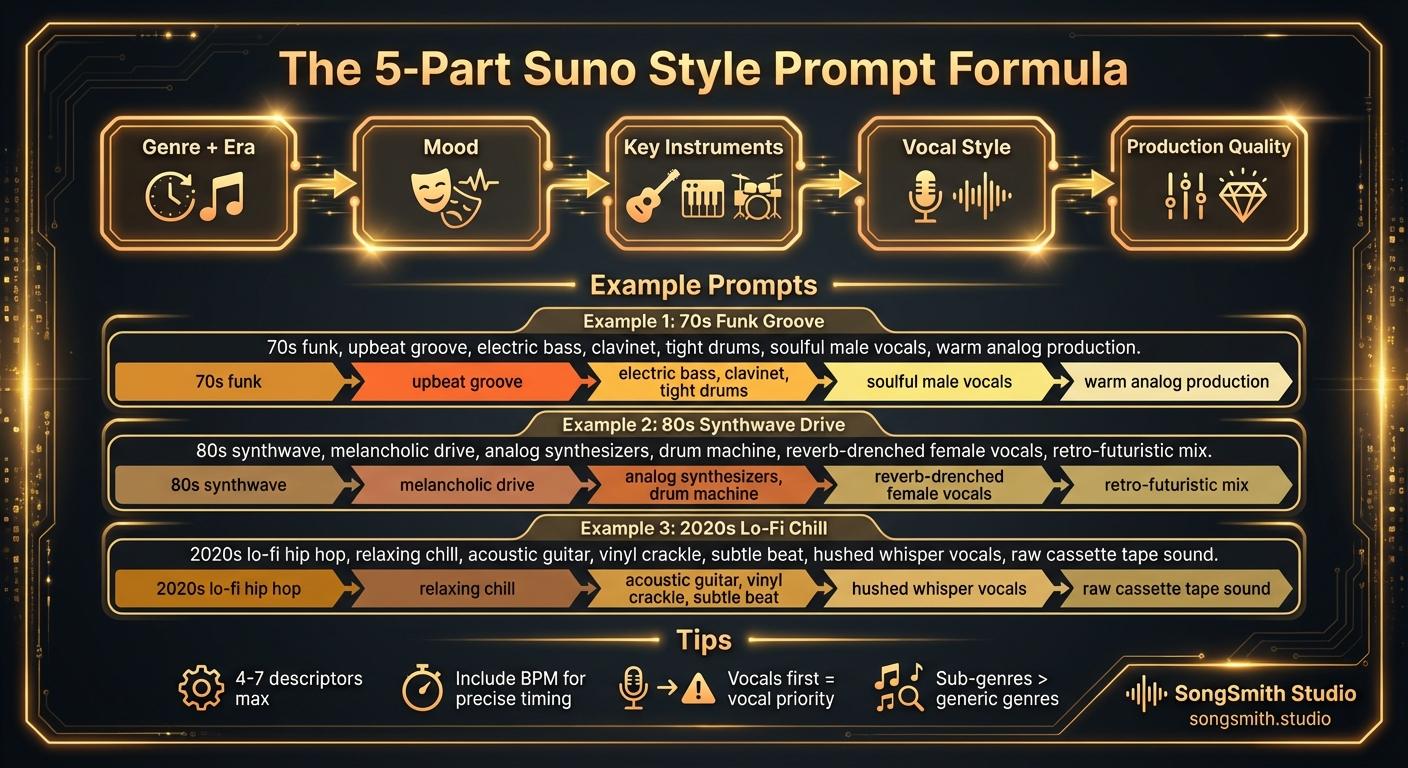
Craft Precise Style Prompts Using This Battle-Tested Formula
Master the 5-part formula for Suno style prompts: Genre + Era, Mood, Instruments, Vocal Style, Production. Learn tips for better results and example prompts that work.
2 min read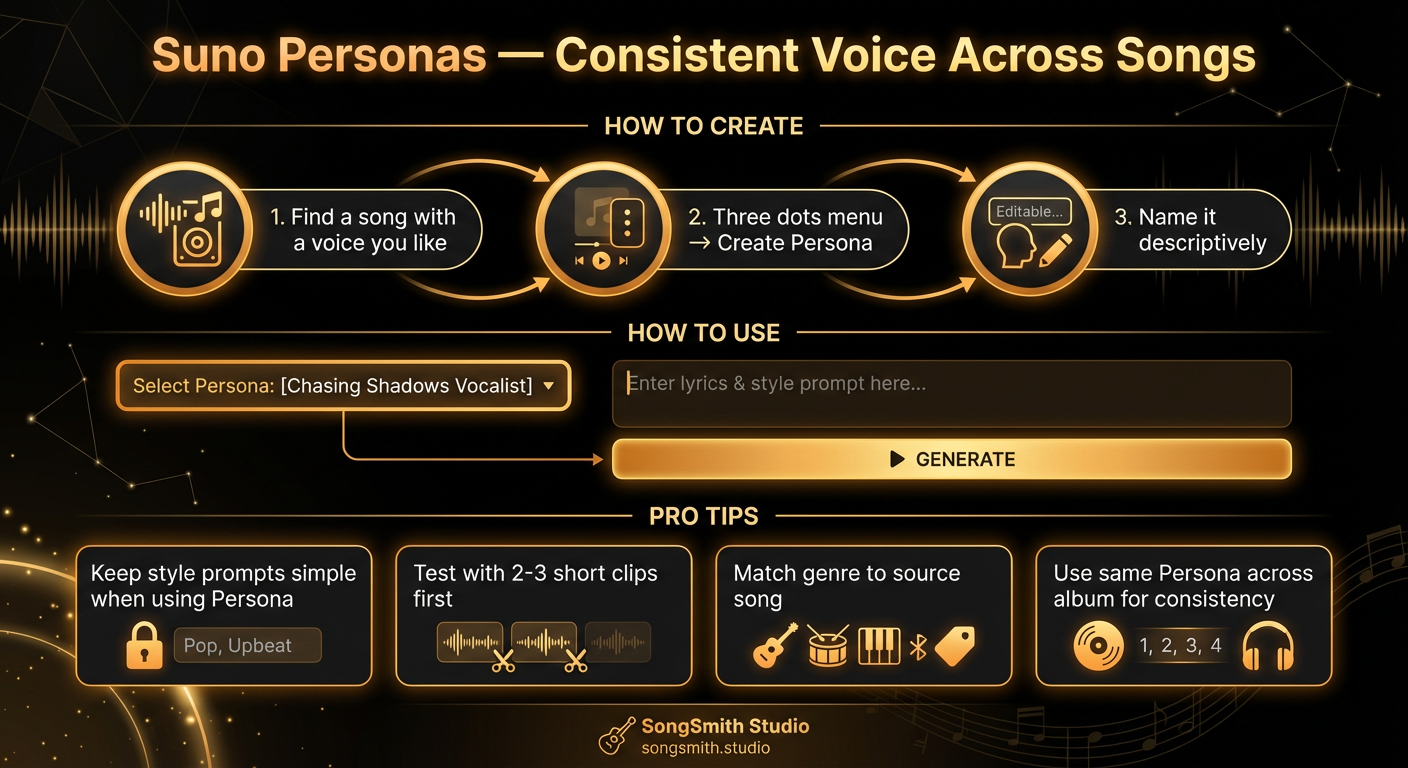
Use Suno Personas to Lock In a Consistent Vocal Identity
Master Suno Personas to get the same voice across all your songs. Learn how to create, use, and combine Personas for albums with consistent vocal identity.
4 min read