The Vocal Stack Cheat Sheet: 12 Tags That Make Suno Vocals Sound Pro
![Dark-themed cheat sheet with two columns. Stacking & Layering on the left (6 tags) and Effects on the right (6 tags), totaling 12 numbered rows. Each row shows the tag name in bold and a one-line description. Stacking tags: double-tracked, octave stack, layered harmonies, gang vocals, call-and-response, ad-libs. Effect tags: autotuned, vocoder, talkbox, reverb-drenched, slapback delay, whisper layer. Each column has a colored left accent bar. Bottom banner: Dry verse + stacked chorus = dynamic contrast. Below that, a code example of a [Chorus] section with stack tags.](/_next/image?url=%2Fblog%2F34-suno-vocal-stack-cheat-sheet.png&w=3840&q=75)
The single biggest gap between an amateur-sounding Suno song and a pro-sounding one is the vocal stack. A pro chorus is almost never one voice. It's 3 to 8 layers stacked together. Suno handles this surprisingly well, but only if you ask for it explicitly. Here are the 12 tags that actually move the needle.
Stacking & Layering Tags
1. Double-Tracked Vocal
The lead vocal is layered twice for thickness. This is standard pro production, almost every commercial chorus uses it.
2. Octave Stack
The same voice doubled an octave higher. Adds brightness and power. The secret behind most modern pop choruses.
3. Layered Harmonies
Additional voices on 3rds and 5ths above the lead. The classic chorus lift: works across pop, rock, country, and gospel.
4. Gang Vocals
A group of voices shouting the hook together. Punk, indie, anthemic rock. Anywhere you want a "whole crowd" feel.
5. Call-and-Response Backing
A secondary voice answers the lead between phrases. Gospel, soul, blues, and modern R&B.
6. Ad-Libs
Improvised hype lines: "yeah," "uh," "woo", between lead lines. Hip-hop, R&B, modern pop, trap.
Effect Tags
7. Autotuned Vocal
Pitch-corrected to a grid. T-Pain, Travis Scott, modern trap. Controls the intensity by adding "heavy autotune" vs "subtle autotune."
8. Vocoder
Robotic pitched harmony. Daft Punk, Imogen Heap, 80s funk. Anywhere you want a synthetic vocal layer.
9. Talkbox
Guitar-meets-vocal hybrid. Zapp & Roger, Peter Frampton, Bruno Mars: distinct, funky, immediately recognizable.
10. Reverb-Drenched Vocal
Massive hall or plate reverb. Dream-pop, shoegaze, atmospheric ballads, when you want the voice to feel huge and distant.
11. Slapback Delay
A short echo that adds rockabilly or dub character. 50s rock-n-roll, Wall of Sound production, modern indie.
12. Whisper Layer
A breathy whispered vocal layered quietly under the main. ASMR-pop, modern R&B, intimate ballads. Creates depth without competing with the lead.
How to Stack Them in Your Style Prompt
Place vocal tags after the lead-vocal description, comma-separated:
Soft female lead vocal, octave stack on chorus, layered harmonies, whisper layer underneath, warm analog productionHow to Use Them Per Section
Place the effect inside the section tag where you want it. This is how you get contrast between a dry verse and a stacked chorus:
[Verse 1]
I was walking home alone
[Chorus: layered harmonies, octave stack]
Lights are burning in the snow
[Bridge: whisper layer, ad-libs]
Every street feels like a ghost
Pro Tips
- Max 3 vocal effects stacked: more than that and the mix gets muddy.
- Reverb + delay = space. Doubles + harmonies = thickness. Pick the effect for the job; don't pile them on.
- Use "dry vocal" for intimate verses and save the wet/stacked treatment for choruses. Dynamic contrast is everything.
- Ad-libs come out best when you explicitly put
[ad-lib]inside parentheses in the lyrics between lines. - Winning combos by genre: Modern pop chorus = lead + double + octave stack + harmonies. Rock = lead + gang vocals on the hook + reverb. Hip-hop = lead + ad-libs + autotune on chorus only.
- The single biggest pro move: start verses with a dry vocal, then unleash the full stack on the chorus. This is how nearly every radio hit is produced.
The Bottom Line
If your Suno choruses sound thin compared to real records, it's not the melody or the production. It's the vocal stack. One voice is a demo; stacked vocals are a release. Add 2–3 layering tags to your next chorus, listen to the difference, and then do it on every chorus going forward.
Create your first Suno album on SongSmith
From a single idea to a complete, YouTube-ready album. AI lyrics, Suno automation, album art, and video rendering — all in one workflow.
Get started freeKeep reading
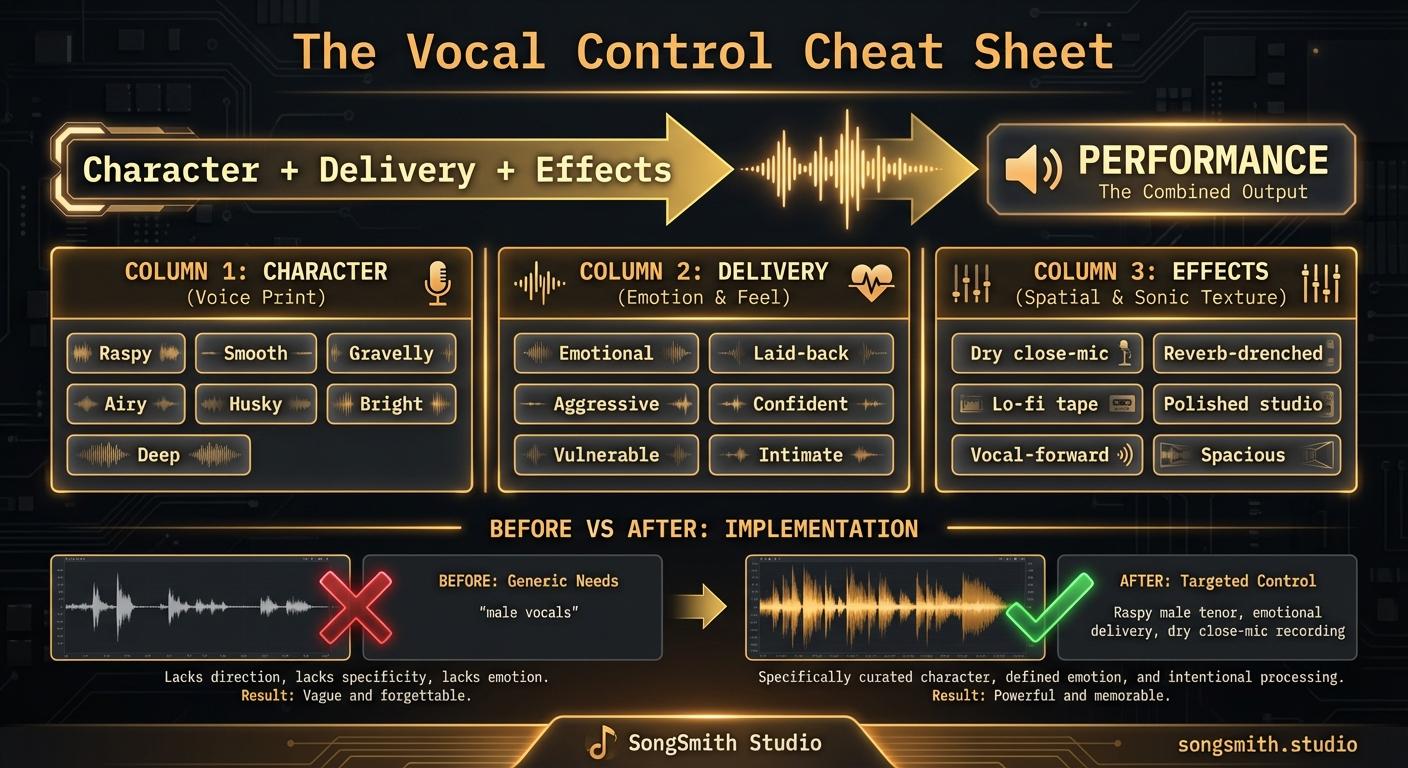
The Vocal Control Cheat Sheet: Master the 3-Layer Formula
Control Suno vocals with the Character + Delivery + Effects formula. Master male, female, and unique vocal descriptions for professional-sounding AI music.
3 min read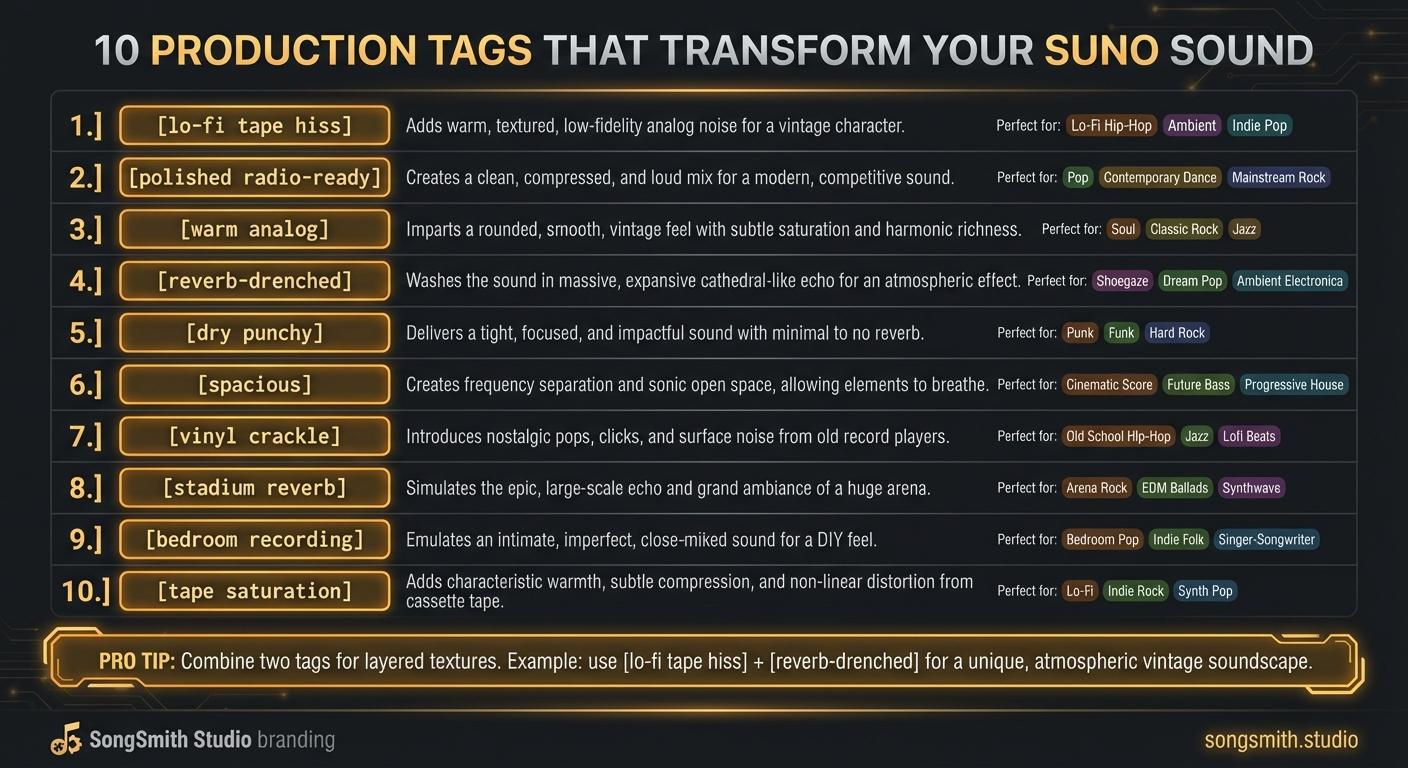
10 Production Tags That Transform Your Suno Sound
Master production tags to control texture, space, and vibe in Suno. Learn lo-fi, polished, analog, reverb, and more, transform your track's sonic character.
4 min read![Three-column cheat sheet showing all Suno structure tags: Structure column with [Intro], [Verse], [Chorus], [Bridge], [Outro], [Break], [Interlude]. Vocal Delivery column with [Whispered], [Spoken Word], [Belted], [Falsetto], [Harmonized], [Ad-lib]. Instrumental column with [Instrumental], [Guitar Solo], [Piano Solo], [Drop]. Bottom shows a perfect song template flowchart.](/_next/image?url=%2Fblog%2F03-suno-structure-tags-cheat-sheet.jpeg&w=3840&q=75)
Master Every Suno Structure Tag for Professional Song Organization
Complete reference of Suno structure tags: [Verse], [Chorus], [Bridge], [Intro], [Outro], vocal delivery tags, and instrumental tags. Save this cheat sheet for every session.
3 min read